What Is HRV and Why Should You Care? A Complete Guide to Heart Rate Variability
Key Takeaway
Your heart doesn't beat like a metronome. And that's a good thing.
Affiliate Disclosure: BetterVitals may earn a commission from purchases made through links in this article, at no additional cost to you. This supports our independent research and analysis. We only recommend products we believe in after thorough evaluation.
Medical Disclaimer
This article is for educational purposes only and is not a substitute for professional medical advice, diagnosis, or treatment. Always consult your healthcare provider before making health decisions.
What Is HRV and Why Should You Care? A Complete Guide to Heart Rate Variability
Your heart doesn't beat like a metronome. And that's a good thing.
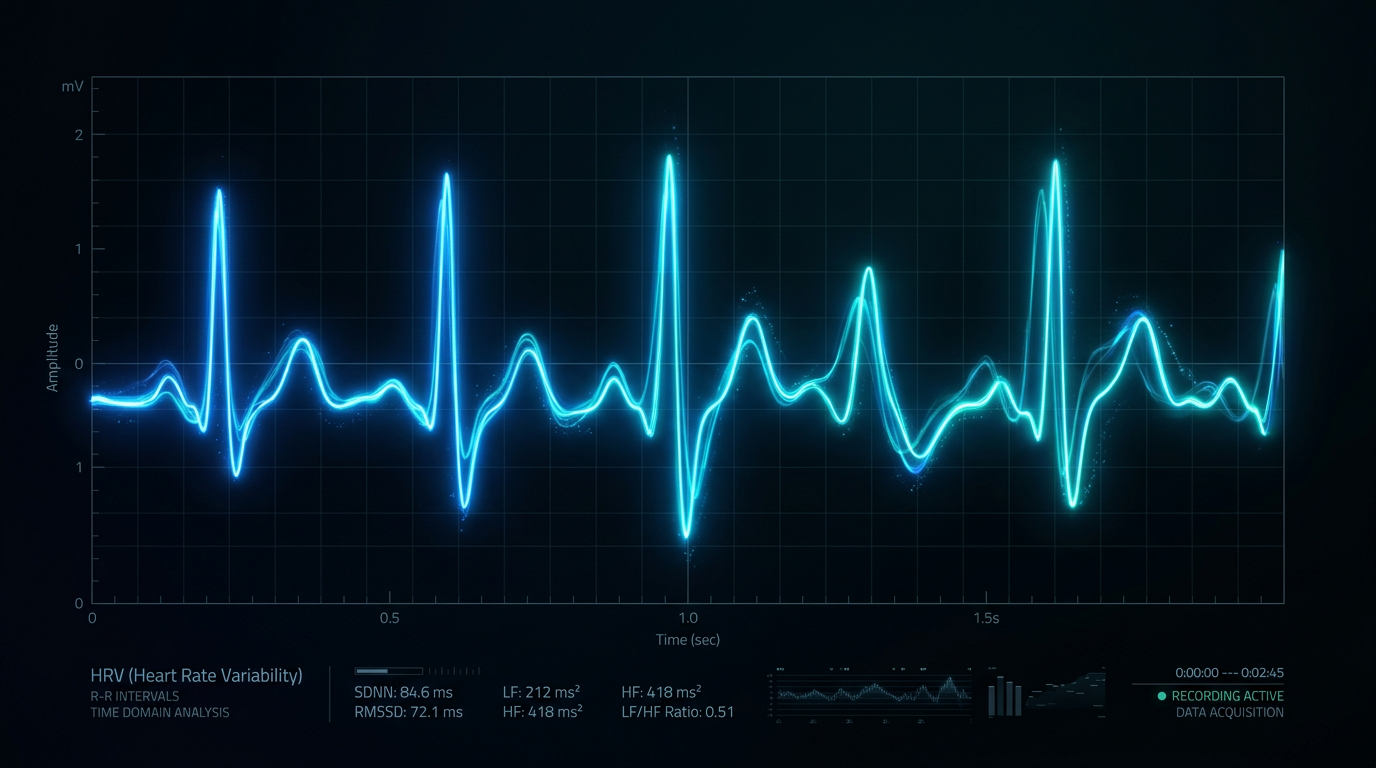
Between each heartbeat, there's a tiny variation in timing — sometimes 0.8 seconds between beats, sometimes 1.1 seconds, sometimes 0.9. This variation is called heart rate variability (HRV), and it's quickly becoming the most important health metric most people have never heard of.
HRV is used by elite athletes, longevity researchers, and biohackers as a window into overall health. And thanks to wearables like the Oura Ring and Whoop, anyone can now track it at home.
This guide explains what HRV is, why it matters, what a good score looks like, and how to start using it to improve your health.
HRV Explained Simply
Your heart rate might be 60 beats per minute. But that doesn't mean each beat is exactly 1 second apart. In reality, the intervals might look like:
0.95s → 1.04s → 0.98s → 1.07s → 0.93s
This variation is HRV. It's measured in milliseconds (ms).
Higher HRV = more variation = generally better. It means your nervous system is flexible and responsive.
Lower HRV = less variation = your body is under stress. Your nervous system is locked into "fight or flight" mode.
Think of it like this: a healthy nervous system is like a skilled driver who can smoothly accelerate, brake, and steer. Low HRV is like a driver who can only floor it — no finesse, no adaptability.
Why HRV Matters: The Science
HRV reflects the balance between your two nervous system branches:
- Sympathetic nervous system (SNS): "Fight or flight." Increases heart rate, raises alertness. Activated by stress, exercise, danger.
- Parasympathetic nervous system (PNS): "Rest and digest." Slows heart rate, promotes recovery. Activated by relaxation, sleep, breathwork.
When both branches are working well and flexibly toggling between each other, HRV is high. When you're chronically stressed, overtrained, or sick, the sympathetic system dominates and HRV drops.
What research tells us:
Cardiovascular health: Higher HRV is associated with lower risk of heart disease and cardiac events. A landmark study in the journal Circulation found that low HRV independently predicts mortality after heart attacks.
Longevity: HRV naturally declines with age, but people who maintain higher HRV for their age tend to live longer and healthier lives. It's a reliable marker of biological (not just chronological) aging.
Mental health: Low HRV is associated with depression, anxiety, and PTSD. Improving HRV through breathwork and exercise has been shown to improve symptoms.
Athletic performance: HRV-guided training (adjusting intensity based on morning HRV) consistently outperforms fixed training plans in research studies.
Immune function: Drops in HRV often precede illness by 1-2 days, making it an early warning system.
Bottom line: HRV is the closest thing we have to a single number that reflects your body's overall resilience and readiness.
What's a Good HRV Score?
This is the most common question — and the most important caveat is that HRV is highly individual. Comparing your number to someone else's is nearly meaningless.
That said, here are general population ranges to give you a rough idea:
Average HRV by Age (RMSSD, in milliseconds)
| Age Range | Average HRV (ms) | "Good" Range |
|---|---|---|
| 18-25 | 55-105 | 70-120+ |
| 25-35 | 45-90 | 60-100+ |
| 35-45 | 35-75 | 50-85+ |
| 45-55 | 25-65 | 40-75+ |
| 55-65 | 20-50 | 30-60+ |
| 65+ | 15-40 | 25-50+ |
Note: These are approximations. Elite athletes in their 40s may have HRVs above 100ms, while a healthy but sedentary 25-year-old might be at 40ms.
What matters more than your absolute number:
- Your personal baseline: Track for 2-4 weeks to establish yours
- Trend direction: Is your HRV gradually going up over months? Good.
- Day-to-day context: A low HRV day after a hard workout is normal. A consistently declining trend isn't.
- Recovery from dips: Healthy people see HRV bounce back quickly after stress. Unhealthy people stay suppressed.
How to Measure HRV
Not all HRV measurements are created equal. Here's what you need to know.
Best time to measure: During sleep
Morning spot-checks are noisy — your HRV is affected by whether you just woke up, drank water, checked your phone, or are thinking about that email from your boss.
Overnight HRV measurement (during sleep) eliminates these variables and gives the most consistent, reliable reading. This is why the best wearables measure HRV while you sleep.
Best devices for HRV tracking
Oura Ring (Gen 4) — ★★★★★
- Measures HRV throughout the night using finger-based PPG sensors
- Reports lowest nighttime HRV and averages
- Beautiful trend visualization
- The most discreet option (it's a ring)
- $299-549 + $5.99/month subscription
Whoop 4.0 — ★★★★★
- Uses last slow-wave sleep cycle for HRV (very consistent methodology)
- Also provides real-time HRV during the day
- Excellent recovery scoring system
- Best for athletes who want HRV-guided training
- $0 device + $24-30/month subscription
Apple Watch (Series 9/Ultra 2) — ★★★☆☆
- Measures overnight HRV and displays in the Health app
- Less consistent methodology than Oura/Whoop
- Good if you already own one, but not worth buying just for HRV
- No subscription required
Chest Strap (Polar H10) — ★★★★★ (for accuracy)
- Gold standard for single-measurement accuracy
- Requires manual morning readings (less convenient)
- Best paired with the Elite HRV app
- ~$90, no subscription
My recommendation:
For most people focused on health optimization, the Oura Ring offers the best combination of accuracy, convenience, and wearability. You put it on and forget about it — and every morning you get a clear picture of your recovery.
If you're an athlete optimizing training, Whoop is excellent for HRV-guided strain management.
→ Read our full comparison: Oura Ring 4 vs Whoop 4.0
Browse All Products
Explore our evidence-based product reviews across every health category.
What Affects Your HRV?
Understanding what moves your HRV helps you make better daily decisions.
Things that INCREASE HRV (good):
- Consistent, quality sleep (7-9 hours)
- Zone 2 cardio (the single best exercise for HRV over time)
- Cold exposure (cold showers, cold plunges)
- Breathwork (especially slow, deep breathing and box breathing)
- Meditation and mindfulness practices
- Social connection and positive relationships
- Time in nature
- Moderate, consistent exercise
Things that DECREASE HRV (watch out):
- Poor sleep (under 6 hours, fragmented, inconsistent schedule)
- Alcohol (even 1-2 drinks can tank HRV by 15-30% that night)
- Overtraining (too much intensity without recovery)
- Chronic stress (work, financial, relational)
- Illness (HRV drops 1-2 days before symptoms)
- Dehydration
- Late-night eating (large meals within 2-3 hours of bed)
- Excessive screen time before bed
The alcohol reality check
This deserves special attention because it surprises people. Even moderate alcohol consumption — 2 glasses of wine — can reduce your HRV by 20-40% that night. It's one of the most dramatic, repeatable effects you'll see when tracking.
Many people who start tracking HRV end up significantly reducing alcohol consumption simply because the data is so clear. Your Oura Ring doesn't lie.
How to Use HRV Practically
Tracking HRV is only useful if it changes your behavior. Here's how to actually use the data:
1. Establish your baseline
Wear your tracker for 2-4 weeks without changing anything. This gives you your personal range.
2. Use it for training decisions
- HRV above baseline: Green light for hard training
- HRV at baseline: Normal training
- HRV significantly below baseline: Prioritize recovery — easy walk, stretching, or rest day
3. Run personal experiments
Use HRV to test whether lifestyle changes actually work for you:
- Track HRV for 2 weeks baseline → change one variable → track for 2 more weeks
- Example experiments: cutting alcohol, adding cold exposure, trying a new supplement, changing sleep schedule
4. Watch for early warning signs
A sustained HRV decline (3+ days below your baseline) often signals:
- Oncoming illness
- Overtraining
- Accumulated stress that needs addressing
- Poor sleep that you might be ignoring
5. Celebrate the long game
The most rewarding use of HRV is watching your baseline gradually increase over months as you improve your fitness, sleep, and stress management. A rising HRV trend is one of the best indicators that you're actually getting healthier — not just looking healthier.
Common HRV Myths
Myth: "Higher is always better." Not exactly. What matters is your trend relative to your baseline. Someone with HRV of 40ms who maintains it consistently can be healthier than someone who swings between 20 and 80.
Myth: "My HRV is low — I'm unhealthy." Not necessarily. HRV is genetic, age-dependent, and affected by many factors. Focus on improving your personal baseline, not hitting an arbitrary number.
Myth: "I should check my HRV multiple times per day." Daytime HRV is noisy and context-dependent. The most reliable reading is during sleep. Check your morning score once, then get on with your day.
Myth: "If my HRV is low today, I can't do anything." One low day means nothing. It's trends over 7-14 days that tell the story. Don't make lifestyle decisions based on a single reading.
Get smarter about health tech
Deal alerts, new reviews, and health tips — delivered weekly. No spam.
Unsubscribe anytime. We respect your inbox.
Getting Started: Your HRV Action Plan
Week 1: Get a tracker. Start wearing it every night. Don't change anything yet.
Weeks 2-3: Observe your patterns. Note what makes your HRV go up and down. Check if alcohol, poor sleep, or hard training days have visible effects.
Week 4+: Start making intentional changes. Add Zone 2 cardio, improve sleep consistency, try breathwork. Watch your 30-day average.
Month 3+: You'll have enough data to see real trends. This is where HRV tracking becomes genuinely powerful — you can see that the lifestyle changes you're making are (or aren't) moving the needle.
The Bottom Line
HRV isn't just another health metric — it's a real-time readout of how well your body is handling life. It integrates sleep, stress, fitness, nutrition, and recovery into a single signal.
You don't need to obsess over it. But if you care about longevity, performance, or simply feeling your best, tracking HRV is one of the highest-ROI habits you can build.
Get a tracker. Establish your baseline. Make better decisions based on real data instead of guesswork.
Your nervous system will thank you.
Next read: How to Improve HRV Naturally: 12 Proven Methods | Oura Ring 4 vs Whoop 4.0 Comparison
Featured Products
Products mentioned in this article



Related Guides
More articles you might find helpful
Eli Health Hormometer FAQ: 30 Real Questions From Early Users (2026)
The Eli Health Hormometer is the first instant at-home cortisol monitor, and because it debuted at CES 2026 it's new enough that most people have the same handful of questions before they buy. We've pulled together the 30 we see asked most often — in health optimization communities, in our inbox, an
How to Improve HRV: The Evidence-Based Guide to Raising Heart Rate Variability
HRV (heart rate variability) is the metric that ties everything together in modern health optimization. It reflects autonomic nervous system balance — the equilibrium between your sympathetic (stress) and parasympathetic (recovery) systems. Higher HRV generally indicates better cardiovascular fitnes
Peptides for Beginners: What They Are, How They Work, and What You Need to Know
Peptides have entered mainstream health discourse — showing up on longevity podcasts, in clinic menus, and across biohacking forums. If you're new to the topic and trying to assess whether they're legitimate science or hype, this beginner's guide gives you the foundational framework to think about t
Written by
Steve Luu
Health optimization researcher and biohacker